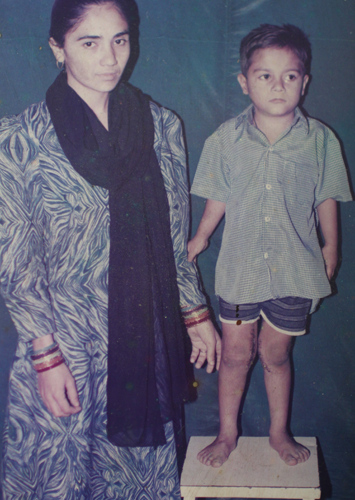
AHMEDABAD: Four-year-old Firoz is raring to go to school. Not that its too late for him to get enrolled. But earlier his presence in a class-room would have raised a stink and forced his mates to run for cover. Not any more.
At the time of birth, Firoz could not defecate as he was born without an anus. After undergoing a series of repair and construction of anus in multiple stages, he could not cease passing his motions! And this continued for four painful years until he underwent Graciloplasty.
Firoz suffered from an absent anal opening traditionally called imperforate anus or Ano-rectal Malformation (ARM), the most common anomaly in the new-born after the nrevous system anomalies.
And though ARM has been successfully treated by abdomino perenial pull-through in which an anus is created by pulling the rear end of the intestine down to the perenial skin, it is reported to have been frequently associated with problem of faecal incontinence due to poor muscle development.
Firoz suffered from the same problem. Though an anus was added to his anatomy, his problem aggravated. He was unable to exercise any control on his motions and consequntly he would continously pass stool.
This was especially embarrassing as an unbearable stench would surround him throughout the day. Moreover, because of this malfunction he also could not be taken any where to a social gathering or functions. Despite turning four this April, he was not even enrolled in a school!
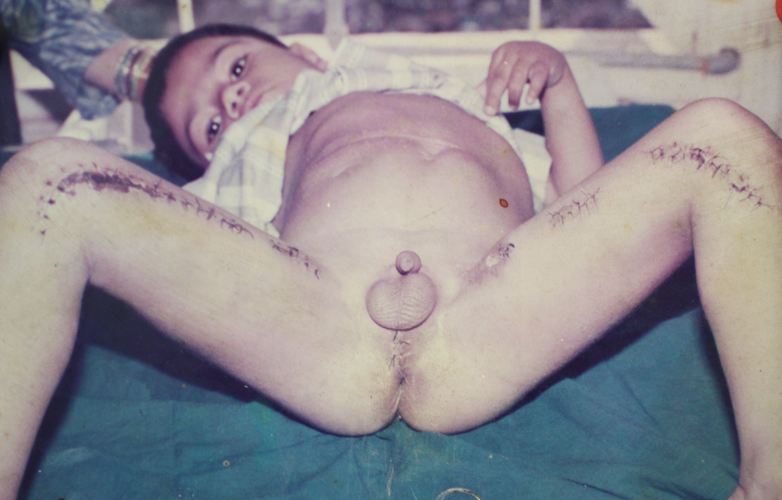
Fortunately, Dr N Bhattacharjee, an eminent paediatric surgeon performed Graciloplasty on him recently at V S Hospital and today Firoz can tell his mother when he gets the call of nature.
The graciloplasty opeation which, according to the doctor, was performed for the first time in the state, ensures faecal continence and allows the patient to exercise voluntary control over his excretory system.
In this,'gracilis', ribbon like muscles from both the thighs were mobilised upwards and 'anal sphincter' responsible for the faecal continence was created by transplanting the muscles around the non-functioning anus. Dr Bhattacharjee says that older techniques for treating ARM have yielded poor results.
Quoting two series of reports he says that in one series, in which 50 patients were treated, none of the patients were reported to have normal control, while in another series the success rate was only 35 percent.
Dr Bhatacharjee points out that ARM is a high incidence disease. At least 70 cases of ARM are reported in the V S Hospital itself every year.
Of these many patients developed psychological problems as they found it difficult to cope with the 'embarrassing' disease.
However, with the successful operation involving Graciloplasty, this vast majority of patients can finally be helped.
This is evident from the smile on Firoz's face who is fast recovering and is eagerly waiting to go to school.
|